Investor Resources
Explore a curated library of tools, research links, analyst commentary, and educational materials to support your investment process.

Closed-End Fund
Education

Market Data
& Reports

External
Resources
Closed-End Fund Education

Investing in closed-end funds (CEFs) and related vehicles requires a clear understanding of their structure, mechanics, and risk dynamics. This section offers foundational resources designed to support both first-time investors and seasoned professionals looking to revisit the basics.
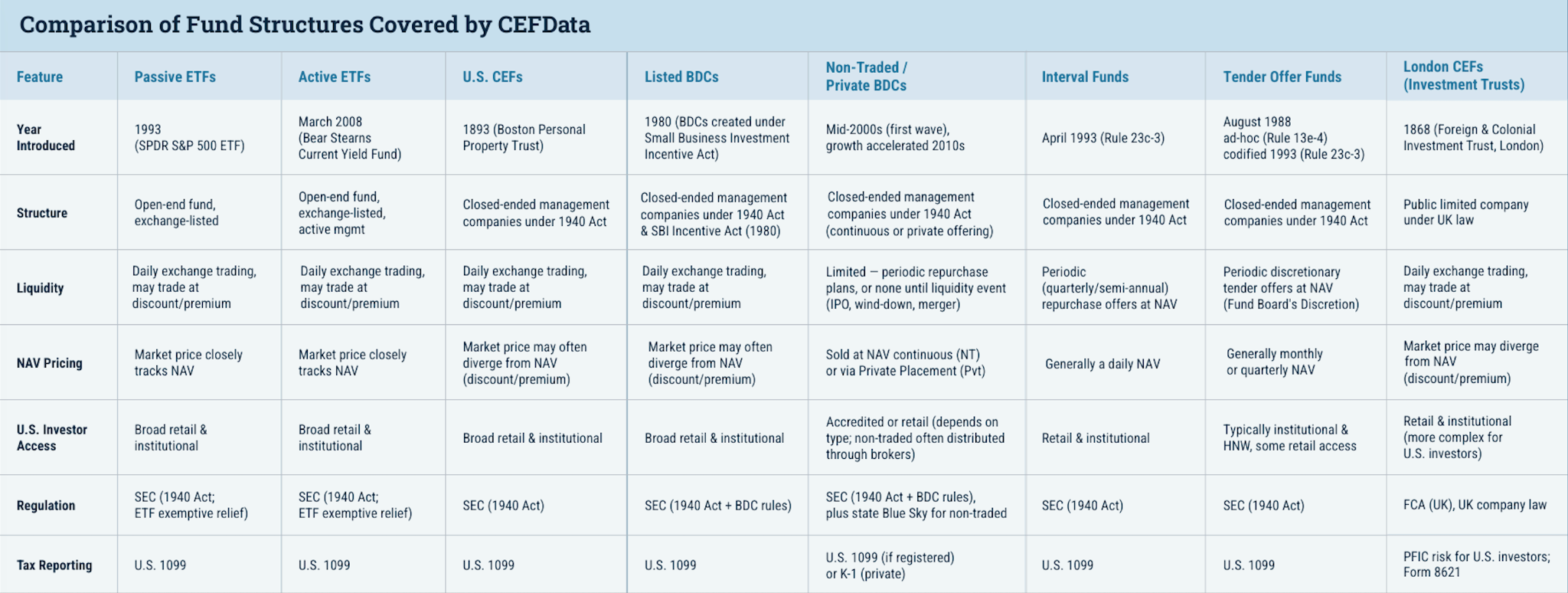
Fund Structure Comparison
CEF Definitions
These documents provide an in-depth overview of key fund types, how they operate, and what investors need to consider when evaluating them.
CEF
Closed-End Funds
A closed-end fund is a publicly traded investment company that raises capital through a one-time public offering and trades on an exchange like a stock. Unlike mutual funds, CEFs issue a fixed number of shares and are not continuously redeemable.
BDC
Business Development Company
A closed-end fund is a publicly traded investment company that raises capital through a one-time public offering and trades on an exchange like a stock. Unlike mutual funds, CEFs issue a fixed number of shares and are not continuously redeemable.
Interval Fund
A closed-end fund is a publicly traded investment company that raises capital through a one-time public offering and trades on an exchange like a stock. Unlike mutual funds, CEFs issue a fixed number of shares and are not continuously redeemable.
SEARCH CEF DATA DEFINITIONS
Explore our glossary of key terms commonly used in the CEF, BDC, and interval fund landscape. Use the search bar below to look up definitions quickly.
- e.g.
- NAV
- Premium / Discount
- Leverage
FAQS
These answers address the most common questions we receive from advisors and investors exploring closed-end fund strategies.
What is a Closed-End Fund (CEF)?
How are CEFs different from mutual funds and ETFs?
- Structure: Mutual funds and ETFs create/redeem shares daily, while CEFs trade on the secondary market.
- Pricing: CEF shares often trade at a premium or discount to Net Asset Value (NAV).
- Strategy: The fixed-capital base allows CEFs to use leverage and access less-liquid or specialized markets (e.g., private credit, energy infrastructure, preferred equity).
- Distributions: CEFs often provide regular income through monthly or quarterly distributions
Why do CEFs trade at discounts or premiums to NAV?
Are CEF distributions the same as dividends?
No. A CEF’s distribution can include:
- Net investment income
- Capital gains
- Return of capital (RoC)
RoC is not always destructive—it can be part of a managed distribution policy. Investors should review coverage ratios, earnings trends, and NAV stability to judge sustainability
What role does leverage play in CEFs?
Are CEF fees too high compared to ETFs or mutual funds?
Who invests in CEFs?
Not just retirees. Users include:
- High-net-worth individuals
- Family offices and RIAs
- Foundations and endowments
- Tactical traders exploiting seasonal or activist-driven opportunities
What types of assets do CEFs invest in?
The ecosystem spans:
- Fixed income: municipal bonds, taxable bonds, senior loans, high yield
- Equity: U.S. and global stocks, covered calls, REITs
- Alternatives: master limited partnerships (MLPs), private credit (via BDCs/interval funds), preferred equity, convertibles
What risks should investors keep in mind?
- Discount/Premium Volatility – Market sentiment can widen discounts suddenly.
- Leverage Risk – Magnifies both gains and losses.
- Liquidity Risk – Underlying holdings may be less liquid, leading to pricing distortions.
- Interest Rate Sensitivity – Fixed-income CEFs can be rate-sensitive.
- Distribution Cuts – Not all income is permanent; destructive RoC is a red flag.
What are common myths about CEFs?
- “Discounts are everything” → True value lies in NAV trends, structure, and manager quality.
- “Always chase yield” → High yields may mask NAV erosion.
- “Leverage is too risky” → When managed well, it enhances returns.
- “CEFs are just for retirees” → Institutions and tacticians use them, too.
- “Premiums = overpriced” → Sometimes justified by stability or unique exposure .
How can investors use CEFs wisely?
- Match fund strategy to your goals (income, diversification, tax efficiency).
- Diversify across 30–45 funds and multiple sectors/managers.
- Use discount history and seasonality (e.g., tax-loss selling season) tactically.
- Monitor activism, board changes, and corporate actions.
- Use tools like CEFData.com for forward-looking discount ranges, coverage ratios, and activism trends.
Bottom Line: CEFs offer income, diversification, and unique opportunities when used thoughtfully. They reward ongoing monitoring, an understanding of structure, and careful manager and sector selection.









CEF ADVISORS EXCLUSIVE:
DIG INTO OUR DATA:
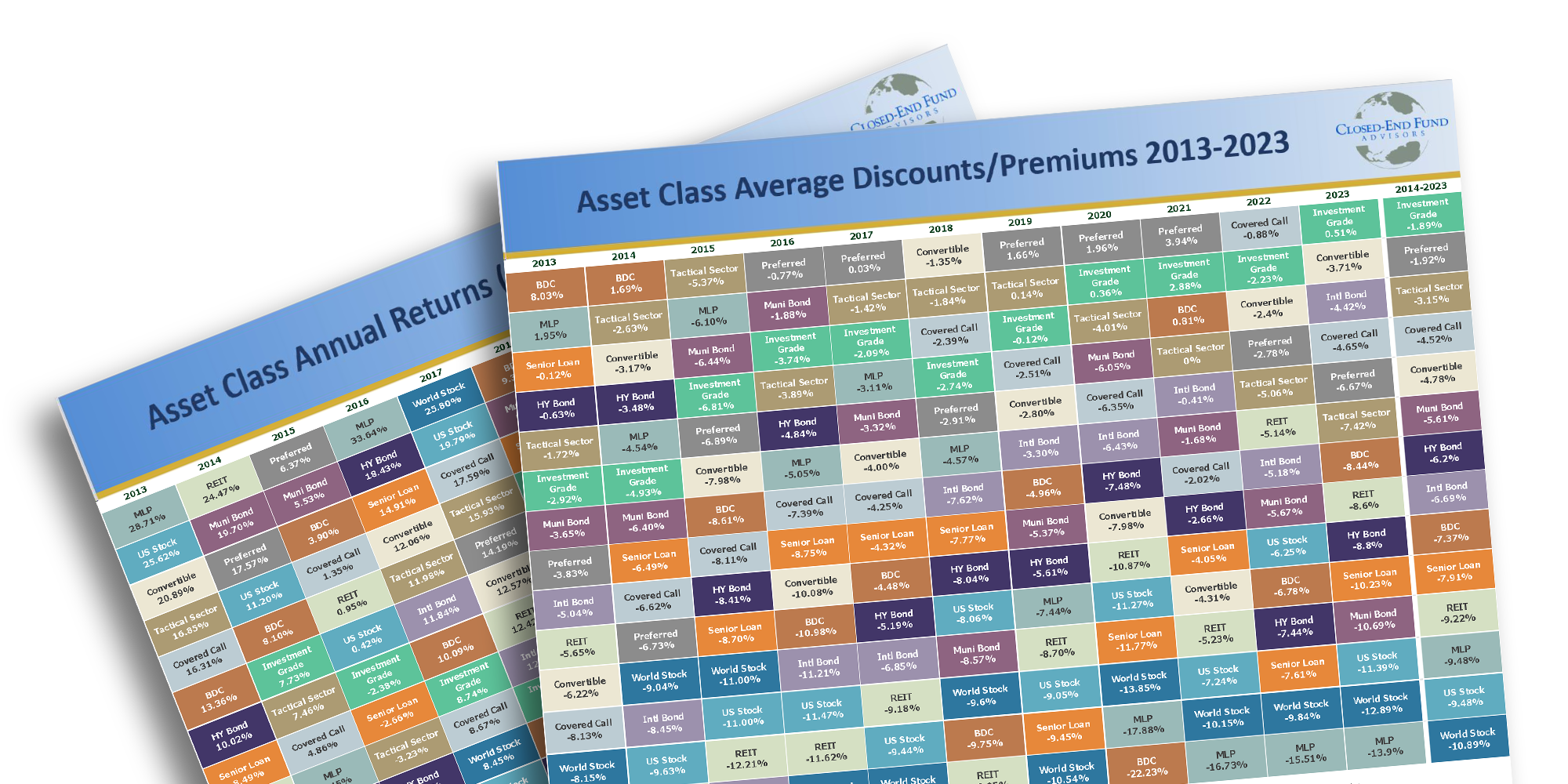
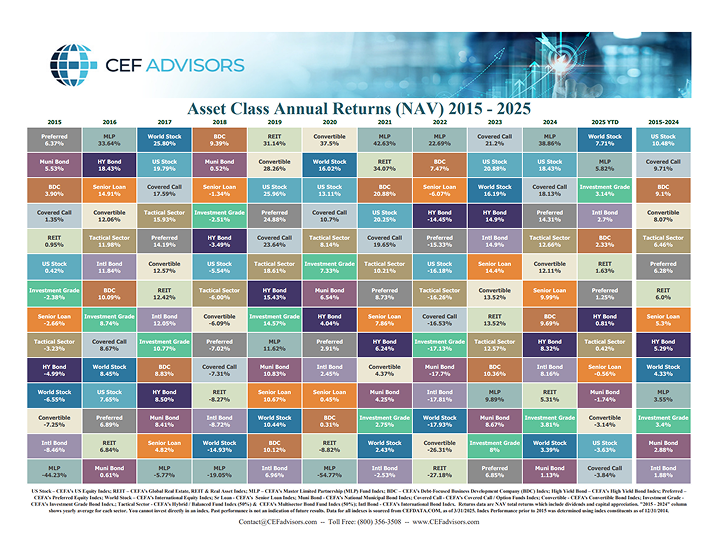
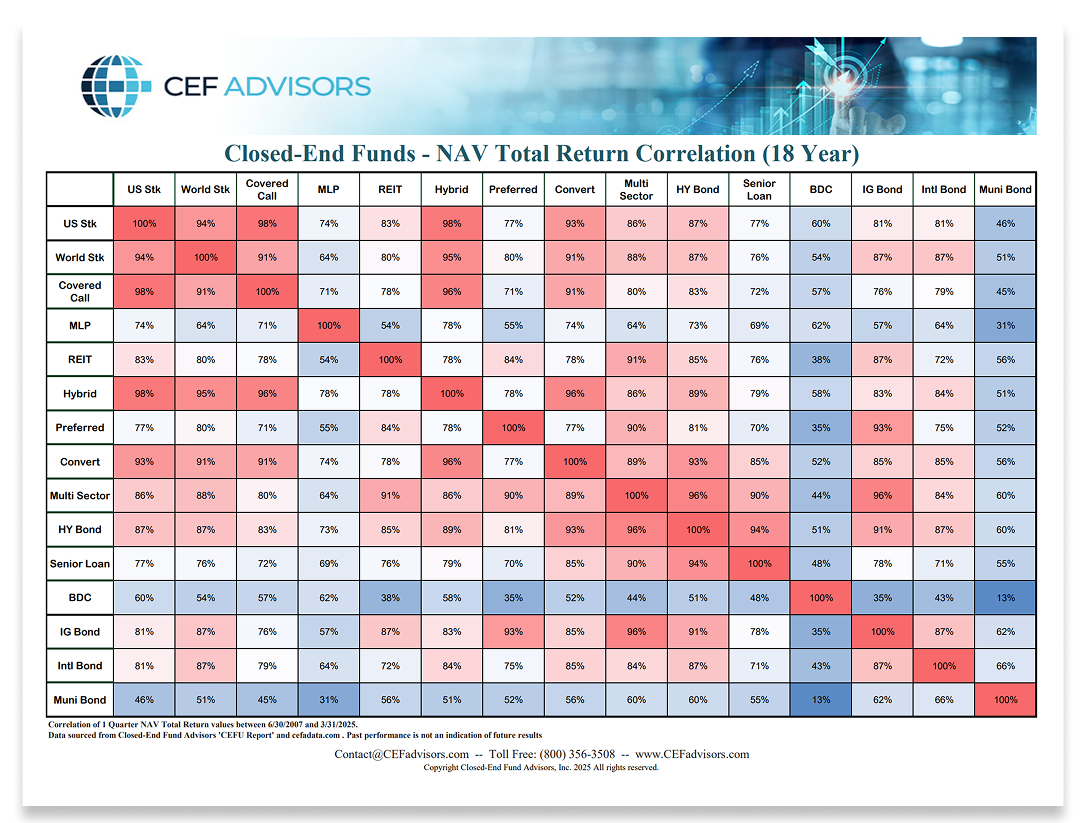
10 years of asset class annual returns and average discounts/premiums